Explain qubits, measurement, interference, and circuits at an introductory level
Quantum Computing: A Mississippi Introduction pathway page

Pathway 11 · Curious minds & developers · 5 open learning steps
Quantum Computing: A Mississippi Introduction
Understand what quantum computing is, what it is not, and why Mississippi is building capacity in quantum research, data science, cybersecurity, and advanced computing.
How this pathway worksKnow why you are learning.
Know why you are learning.
Practice with purpose.
Leave with a next step.
Courses are arranged as a recommended sequence, not a requirement. Start with the foundation if the topic is new, or choose the course that closes a specific gap. Progress here is a planning aid; provider completion and credential rules are separate.
Who this is for
Curious learners, educators, developers, and organizations assessing a future-facing field
Understand core quantum ideas without hype, practice with credible open learning, and distinguish a research question from a problem classical computing already handles well.
Compare quantum claims with a strong classical baseline
Choose a realistic next learning step without overstating readiness
A shared foundation
Mississippi’s quantum opportunity begins with patient, shared capacity.
That capacity will be built through relationships among campuses, schools, employers, public institutions, and communities—not through a single program or claim. Learners can begin now through mathematics, physics, computer science, cybersecurity, materials, scientific computing, and shared research experience. The Commons separates those foundations from quantum-computing claims so every learner can choose an honest next step.
Algorithms, programming, simulation, and new approaches to information processing.
Research in quantum dots, optics, nanomaterials, condensed matter, and quantum many-body systems.
Shared computing, research experience, and national-laboratory pathways help learners and researchers move from curiosity to practice.
Before you startCourses open on the provider’s website. The Commons does not require an account, but a provider may require registration. Confirm current cost, certificate, language, accessibility, and participation requirements on the course page.
01
MAIC learning visualFoundation · Mississippi AI Collaborative
Quantum Foundations for Mississippi
Begin inside the Commons with four plain-language lessons, real-world examples, knowledge checks, and a printable non-credit completion record.
Listing checked October 27, 2026 · Report a change
02
 MAIC learning visual
Build · The Open University · OpenLearn
Introduction to Quantum Computing
Study bits, qubits, superposition, entanglement, gates, circuits, and current hardware in a free eight-hour course that can also be downloaded for offline study.
View course details ↗Listing checked October 27, 2026 · Report a change
03
 IBM
Build · IBM Quantum Learning
Use a Quantum Computer Today
Run a first quantum program and learn the essential ideas through a beginner-friendly, hands-on course. An IBM account may be needed for saved progress, hardware access, or the optional badge exam.
View course details ↗Listing checked October 27, 2026 · Report a change
04
 Microsoft Learn
Build · Microsoft Learn
Quantum Computing Fundamentals
Follow a free, interactive learning path from qubits and quantum algorithms to introductory programming with Q# and the Quantum Development Kit.
View course details ↗Listing checked October 27, 2026 · Report a change
05
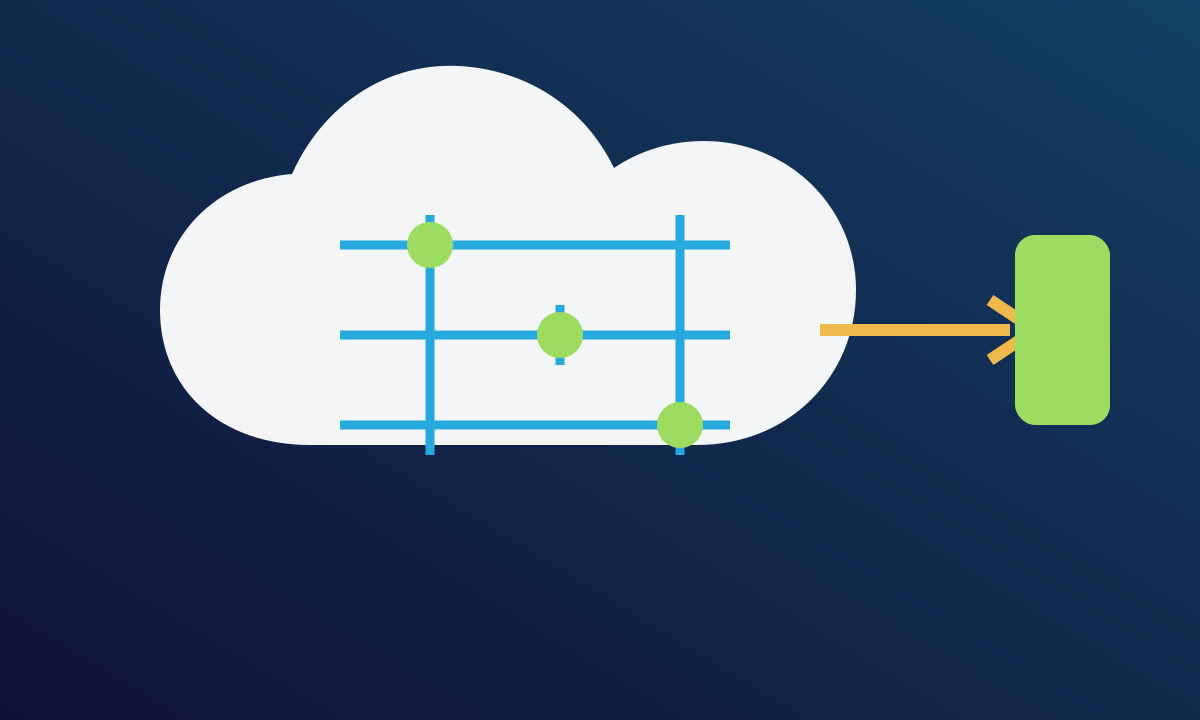 MAIC learning visual
Apply · IBM Quantum Learning
Basics of Quantum Information
Build a deeper mathematical and conceptual foundation in quantum states, circuits, entanglement, teleportation, and Qiskit. The lessons are openly readable; earning the digital badge requires signing in and passing IBM’s course exam.
View course details ↗Listing checked October 27, 2026 · Report a change
Free MAIC course · No account required
Quantum Foundations for Mississippi
Four short lessons for learners who want a useful foundation before choosing a technical course. Read each explanation, connect it to a familiar situation, and answer one knowledge check.
0/4knowledge checks correct
Lesson 1 · Two kinds of information
A qubit is not simply a faster bit.
A classical bit is read as 0 or 1. A qubit is described by a quantum state that can combine possibilities. When it is measured, the result is still an ordinary 0 or 1. Quantum algorithms are carefully designed so useful answers become more likely when those measurements are repeated.
Lesson 2 · The important behaviors
Superposition, interference, and entanglement work together.
Superposition lets a qubit be prepared as a combination of basis states. Interference can strengthen useful probability patterns and weaken unhelpful ones. Entanglement creates correlations between quantum systems that cannot be explained by treating each qubit independently.
Lesson 3 · Programs become circuits
Quantum gates change states; circuits organize the changes.
A quantum program can be represented as a circuit. Gates perform controlled operations on one or more qubits. The circuit is run many times because measurement is probabilistic, and the collection of results is analyzed with classical software.
Lesson 4 · Mississippi-ready judgment
Start with the problem, then test whether quantum fits.
Quantum computers are experimental tools, not universal replacements for laptops or supercomputers. Promising research areas include simulation, optimization, materials, chemistry, and some security questions. A responsible project compares quantum and classical approaches, identifies the evidence needed, and communicates uncertainty.
Completion record
Complete all four checks to unlock your record.
4 knowledge checks remain. You may retry any answer.
Final milestone
Show what you can now explain, evaluate, or make.
Use this pathway to complete one small piece of evidence: explain qubits, measurement, interference, and circuits at an introductory level; compare quantum claims with a strong classical baseline; choose a realistic next learning step without overstating readiness. Document what you tried, what you checked, what changed, and the next question you still need to answer.