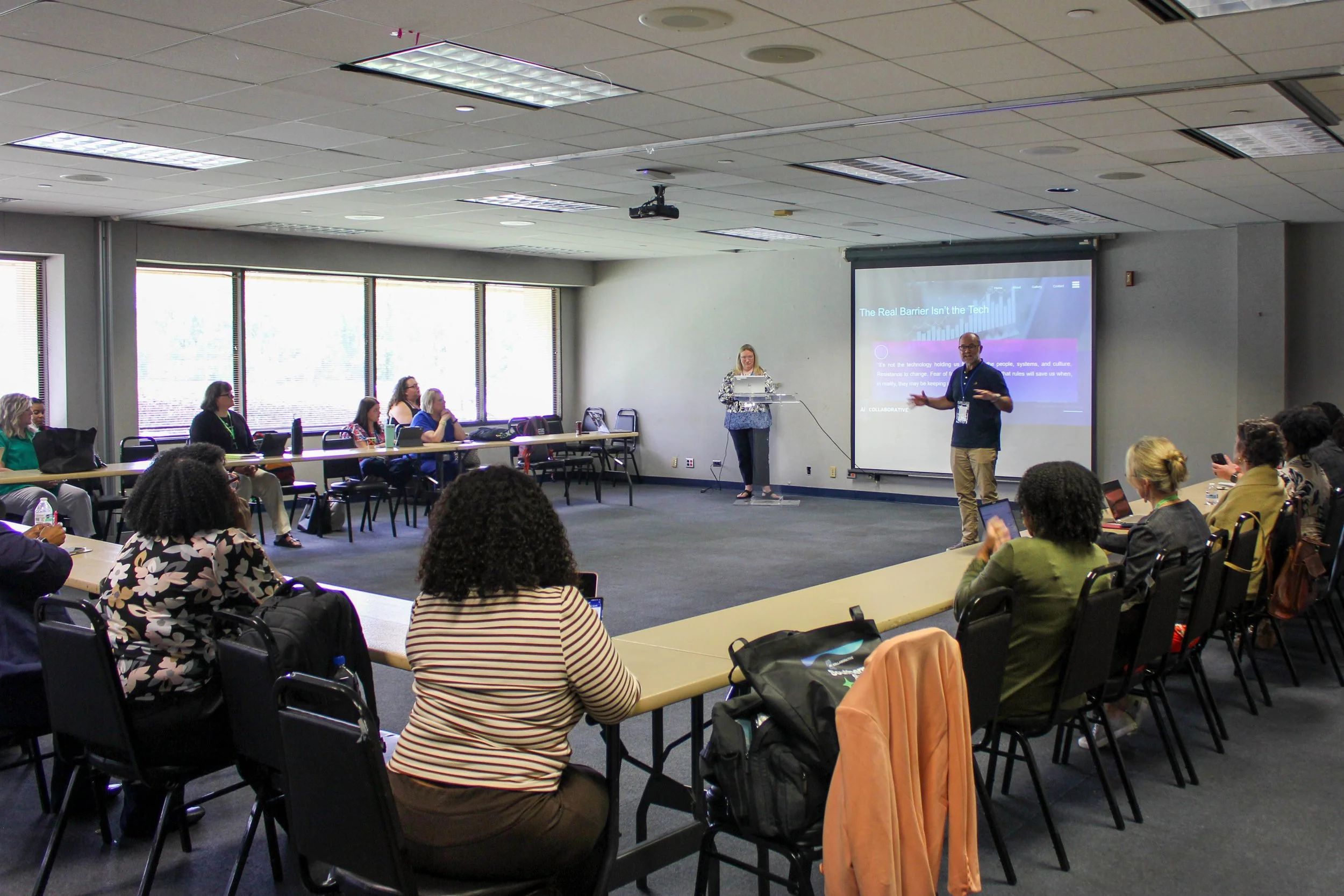
Mississippi community members working through practical AI guidance together
Research-informed guidance built for use with other people
Policy template · Policy builder + checklists

K–12 Education AI Policy Template

Build local guidance for instruction, student safety, data stewardship, accessibility, procurement, and responsible use.

Educators
Adapt before adopting

Policy should fit the people and work it governs.

Use the template with local leadership, workers, learners, and affected communities. Confirm the rules that apply and name who can answer questions, approve exceptions, and correct harm.

EditionEdition 1.0
Last reviewedOctober 27, 2026
Review bodyMississippi AI Collaborative
Board leadKrystal Chatman
Next reviewApril 2027, or sooner after a material source change
Report a correction
Core message

AI may support learning, but it must not replace student thinking, educator judgment, family trust, or a child’s right to privacy and equal access.

What you will leave with

A district- or school-ready policy covering classroom use, student data, assessment, accessibility, procurement, family communication, and human review.

Start here

Ask these five questions first.

  1. 01

    What learning or operational purpose does this use serve?

  2. 02

    Is the tool approved and age-appropriate?

  3. 03

    Could student information or identifiable work leave school control?

  4. 04

    How will access, disability, language, and unequal effects be addressed?

  5. 05

    Which educator or administrator can explain, override, and correct the result?

Words that change the meaning

Know the distinctions.

Approved AI use
A documented purpose, tool, information flow, reviewer, and set of safeguards authorized by the organization.
Sensitive information
Information that could identify, expose, stigmatize, endanger, or materially affect a person or organization.
Consequential decision
A decision affecting rights, access, opportunity, employment, education, health, safety, finances, or essential services.
Meaningful human review
Review by a person with the information, expertise, time, and authority to question an output and change the result.
AI incident
A privacy, security, safety, fairness, deception, accessibility, or unauthorized-use failure involving an AI system.
Retirement
A documented process for stopping a use, preserving required records, exporting needed data, and removing access safely.
Evidence behind this guide

Why this policy protects people while supporting Mississippi schools.

These primary and authoritative sources shaped the policy’s rules, review points, and accountability structure.

01 · Mississippi education guidance2024

Artificial Intelligence: Guidance for K–12 Classrooms

Mississippi Department of Education

What we learned

MDE frames classroom AI as an instructional and policy question requiring educator judgment, student safeguards, and local planning.

How it shaped this resource

It grounds the learning-purpose, educator-accountability, classroom-expectation, and local-approval sections.

Read the original source ↗
02 · International education guidance2023

Guidance for generative AI in education and research

UNESCO

What we learned

UNESCO emphasizes human agency, age-appropriate use, privacy, inclusion, validation, and pedagogical fit.

How it shaped this resource

It shapes the age, privacy, accessibility, human-oversight, and educational-value requirements.

Read the original source ↗

Sources and requirements can change. Check the publication date, read the original material, and confirm the rules that apply locally before making a consequential decision.

Understand the choices

Put responsible AI into practice for Mississippi schools.

Use these policy areas to turn values into decisions, responsibilities, safeguards, and remedies people can understand.

01

Learning and assessment

Set assignment-level expectations for required, permitted, limited, and prohibited AI assistance. Preserve opportunities for students to read, write, calculate, create, and reason independently.

  • Collect process evidence as well as final work.
  • Do not treat an AI-detection score as proof of misconduct.
  • Keep educators responsible for grading and feedback.
02

Age, privacy, and safety

Use school-approved systems consistent with age requirements and local safeguards. Do not place student names, records, disability information, behavior notes, or identifiable work into an unapproved tool.

03

Equity and accessibility

Provide accessible formats and a meaningful non-AI option. Review whether examples, languages, infrastructure, and error patterns exclude Mississippi learners or communities.

04

Procurement and accountability

Review educational value, evidence, data terms, security, accessibility, cost, ownership, parent communication, incident response, and exit before adoption.

Make a plan

Build your policy step by step.

0 of 7 completeSaved on this device
Good places to begin

Use AI to support the work.

✓ Teacher-reviewed planning and practice materials

✓ Student critique of an AI answer using primary sources

✓ Accessible drafting support with an equivalent non-AI option

Stop and reconsider

Do not hand over the judgment.

× Uploading identifiable student records or work

× Automated grading, discipline, placement, counseling, or safety decisions

× Requiring an unapproved commercial account to access instruction

Use the tools

Build the policy and the operating tools behind it.

Adapt the clauses and complete the reviews with the people responsible for the work and the people affected by it.

Policy starter

K–12 core policy clauses

Adapt these clauses for formal review and approval.

0 of 8 checked
Interactive checklist

AI use approval review

Complete before approving a pilot, workflow, purchase, or embedded feature.

0 of 7 checked
Review tool

Vendor due-diligence questionnaire

Use before signing, renewing, or expanding a service.

0 of 8 checked
Action plan

AI incident response card

Use when information, people, decisions, or trust may have been harmed.

0 of 6 checked
Practice together60 minutes

School AI Policy Workshop

Turn one real classroom or administrative use into policy language and an approval decision.

  1. 1

    Choose one use and state the learning or operational goal.

  2. 2

    Map student information, age requirements, access, and possible consequences.

  3. 3

    Complete the approval and vendor reviews.

  4. 4

    Classify the use as allowed, approval required, or prohibited.

  5. 5

    Draft the relevant clauses, family notice, reviewer, and evidence plan.

  6. 6

    Ask a student, family, educator, and accessibility representative what the draft misses.

Talk about it

Would a student understand what is expected, remain able to learn without the tool, and know who can correct a problem?

Before you act

Share the plan with the people responsible for the work and the people who may be affected. Confirm local rules, protect private information, and name the person who can answer questions or correct a problem.