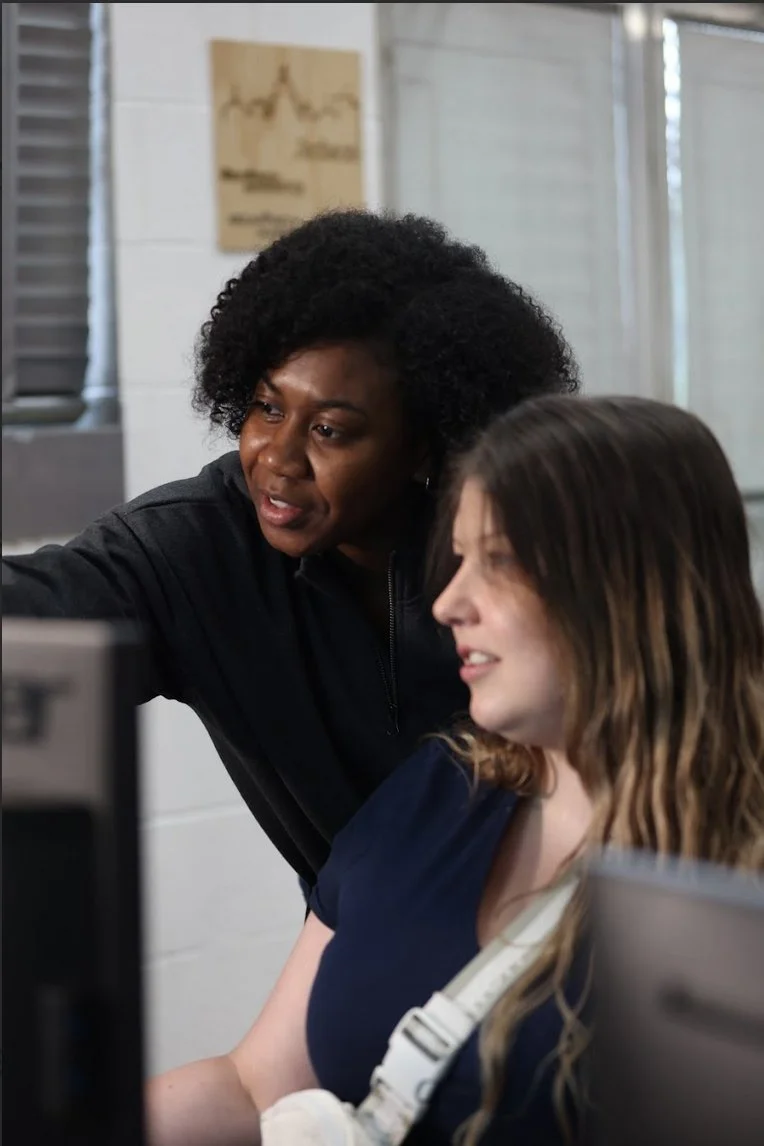
Research-informed guidance built for use with other people
Prompt guide · Ready-to-adapt prompts + test lab
Prompts for Higher Education
Support course design, student services, and research planning while preserving academic judgment, privacy, and disciplinary standards.
Educators
Start with the work
A prompt is a draft tool—not the decision maker.
Choose one real task, replace the brackets with safe context, test the result against a clear standard, and keep the person doing the work responsible for every claim and final choice.
EditionEdition 1.0
Last reviewedOctober 27, 2026
Review bodyMississippi AI Collaborative
Board leadKrystal Chatman
Next reviewApril 2027, or sooner after a material source change
Start with the real task, not a magic phrase. A prompt can clarify the work, but local knowledge and human judgment still determine whether the result is useful for higher education.
What you will leave with
Four ready-to-adapt higher education prompt patterns, a safe-input routine, a verification plan, and a clear decision about when a person or non-AI approach is better.
Start here
Ask these five questions first.
01
What specific task and audience should the output serve?
02
What information is genuinely necessary—and what must stay out?
03
What source, standard, or expert will be used to check the answer?
04
What decision must remain with a qualified person?
05
What would make a non-AI approach safer, faster, or more appropriate?
Evidence behind this guide
Why context, safe inputs, and human review matter more than clever wording.
The source guidance emphasizes protected information, lived and professional context, verification, accountability, and the limits of generated content.
01 · International education guidance2023
Guidance for generative AI in education and research
UNESCO
What we learned
UNESCO connects educational use with human agency, privacy, disciplinary purpose, inclusion, and research integrity.
How it shaped this resource
It shapes the learning, research, disclosure, accessibility, and source-verification patterns.
Sources and requirements can change. Check the publication date, read the original material, and confirm the rules that apply locally before making a consequential decision.
Understand the choices
Build the prompt around your people, purpose, and context.
Use the task, audience, local conditions, constraints, output format, and review test that fit the work. The same prompt should not be copied into every classroom, business, campus, or community.
01
Start with the work
State the real purpose: support learning, disciplinary inquiry, research administration, or student service while preserving academic and professional judgment. Name the audience, desired outcome, and how the result will be used before writing instructions.
02
Protect the input
Do not enter student records, unpublished research, human-subject data, peer-review material, confidential partner information, credentials, or protected institutional records. Use fictional, public, aggregated, or properly approved information instead.
03
Request visible limits
Ask the system to separate facts from suggestions, identify uncertainty, avoid invented sources, and state what information it would need to improve the answer.
04
Review outside the tool
Check important facts in original sources, apply professional and community knowledge, revise for accessibility and context, and keep a person accountable for use.
Make a plan
Take these 5 steps.
0 of 5 completeSaved on this device
Good places to begin
Use AI to support the work.
✓ Creating a first draft from public or fictional information
✓ Generating questions, alternatives, or structures for a person to evaluate
✓ Reformatting text after accuracy, context, and accessibility review
Stop and reconsider
Do not hand over the judgment.
× Uploading private, confidential, protected, or proprietary information
× Requesting a final consequential decision or professional judgment
× Publishing an answer, citation, statistic, translation, or claim without verification
Use the tools
Choose one higher education task. Adapt it. Test it. Make it yours.
Replace brackets with safe, relevant context. Each template states what the person using it must still know, check, change, and own.
Prompt template
Assignment redesign partner
Develop learning-centered options for faculty review.
1. Task: Propose three versions of [assignment] that make student reasoning and process visible.
2. Context I can safely provide: Discipline, learning outcomes, allowed AI status, class context, accessibility needs, and assessment constraints.
3. Output: For each: student work, allowed support, process evidence, rubric evidence, accessibility option, and likely workaround.
4. Boundaries: Do not invent facts, quotations, statistics, people, policies, citations, or sources. Mark uncertainty and ask for missing information.
5. Human review: Faculty verify disciplinary validity, workload, equity, and policy alignment.
Prompt template
Research question challenger
Use AI to challenge—not author—the researcher’s reasoning.
1. Task: Ask critical questions about the scope, assumptions, concepts, and alternative explanations in this research question.
2. Context I can safely provide: A nonconfidential question and researcher-written rationale; no unpublished findings or participant data.
3. Output: Questions grouped by concept, method, evidence, ethics, and alternative explanation; no fabricated citations.
4. Boundaries: Do not invent facts, quotations, statistics, people, policies, citations, or sources. Mark uncertainty and ask for missing information.
5. Human review: The researcher consults original scholarship and retains responsibility for design.
Prompt template
Study practice generator
Create practice from instructor-approved material.
1. Task: Create practice questions from only the supplied material.
2. Context I can safely provide: Course level, learning objectives, approved text, desired difficulty, and format.
3. Output: Questions, answer rationales citing the supplied section, and a confidence warning when unsupported.
4. Boundaries: Do not invent facts, quotations, statistics, people, policies, citations, or sources. Mark uncertainty and ask for missing information.
5. Human review: The learner checks answers against course materials and explains reasoning independently.
Prompt template
Student-service message
Draft clear information without making a student decision.
1. Task: Draft a plain-language explanation of [published campus process].
2. Context I can safely provide: Official public policy, deadlines, contact information, accessible alternatives, and intended audience.
3. Output: Short explanation, steps, required documents, exceptions to confirm, and human contact.
4. Boundaries: Do not invent facts, quotations, statistics, people, policies, citations, or sources. Mark uncertainty and ask for missing information.
5. Human review: Qualified staff verify policy and handle individual circumstances.
Practice together30 minutes
Prompt Test Lab
Test one higher education prompt against a real quality standard without using sensitive information.
1
Choose a low-stakes task and record what a good result must contain.
2
Adapt one prompt template using fictional or public context.
3
Run it once and mark accurate, useful, missing, unsupported, biased, or unclear parts.
4
Change one instruction and test again against the same standard.
5
Verify important claims outside the tool and decide whether AI added enough value to keep using.
Talk about it
Which improvement came from clearer instructions, and which still required human knowledge, source-checking, or a different tool?
Before you act
Share the plan with the people responsible for the work and the people who may be affected. Confirm local rules, protect private information, and name the person who can answer questions or correct a problem.